E-Invoice API and Platform API: Simplifying Malaysia’s Billing
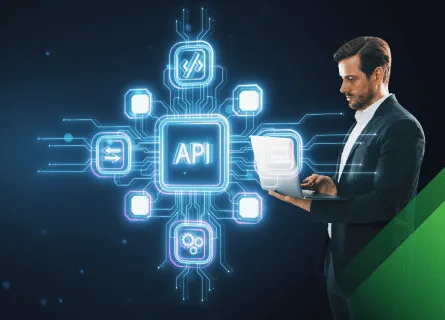
In today's fast-evolving digital landscape, e-invoicing is essential for businesses to ensure compliance and streamline financial processes. The Software Development Kit (SDK) released by the Inland Revenue Board of Malaysia (IRBM) includes 15 APIs, categorized into platform and e-invoicing APIs. Each category serves a distinct purpose, enabling businesses to navigate the complexities of digital invoicing efficiently. For a broader understanding of e-invoicing compliance, check out this complete guide to e-invoicing in Malaysia.
What is an API?
An Application Programming Interface (API) is a set of protocols that allows different software applications to communicate. In e-invoicing, APIs enable direct connections between Enterprise Resource Planning (ERP) systems and the MyInvois Portal, automating invoice submission, validation, and management. Specifically, an e-invoicing API facilitates the seamless exchange of invoicing data, ensuring accuracy and efficiency in financial workflows.
E-Invoicing API: Core Functions
The E-Invoicing API handles essential e-invoicing tasks, including document submission, validation, retrieval, and status tracking. Key e-invoicing APIs include:
- Validated Taxpayer's TIN API: Verifies Tax Identification Numbers (TINs) against stored data to prevent errors and fraud.
- Submit Documents API: Sends e-invoices, allowing multiple documents to be bundled in a single submission with unique identifiers. It provides validation feedback for rejected documents.
- Cancellation API: Allows cancellation of documents within 72 hours of validation, requiring a unique identification number (UUID) and reason for cancellation.
- Rejection API: Permits rejection of documents within 72 hours post-validation, ensuring timely correction of discrepancies.
- Get Recent Documents API: Retrieves documents issued or received in the past 30 days, offering an overview of invoicing activities.
- Get Submission API: Provides status details for submitted documents, helping businesses monitor their submissions.
- Get Document API: Retrieves full document details using a unique identifier, focusing on valid, actionable data.
- Get Document Details API: Offers detailed validation results for documents, useful for accessing documents in invalid states.
- Search Documents API: Enhances filtering capabilities for precise queries, allowing businesses to perform complex searches across large datasets.
Strategic Importance of E-Invoicing APIs
The introduction of these APIs by IRBM, often referred to as LHDN (Lembaga Hasil Dalam Negeri, the Malay name for IRBM), represents a significant advancement in Malaysia's e-invoicing landscape. Learn more about the IRBM’s role in driving this initiative. By leveraging these APIs, businesses can achieve faster integration without the need for custom coding. This reduces implementation time and helps businesses remain agile in response to changing regulations.
Moreover, the APIs' cross-system compatibility allows integration across various ERP, accounting, and billing software, which is valuable for businesses operating in multiple locations. The real-time efficiency of these APIs enhances transaction speed, reducing the risk of delays or errors, positively impacting cash flow and financial stability. For a deeper dive into API integration, see this comprehensive guide on Malaysia e-invoicing API integration.
The expandable nature of the API model enables businesses to add new features as needed, ensuring that invoicing processes remain adaptable and future-proof. For developers, resources like the LHDN e-invoice API documentation and sandbox environments provide essential support for testing and implementation, as detailed in this SDK guide for e-invoicing in Malaysia.
Potential Challenges and Solutions
Implementing e-invoicing APIs can present several challenges for businesses:
- Integration Issues: Integrating existing ERP or accounting systems with e-invoicing APIs can be complex, especially with outdated systems. This can lead to delays and increased costs.
- Data Migration Difficulties: Migrating historical invoicing data from paper-based or legacy systems can result in data integrity issues or loss of information, potentially impacting operations.
- Employee Adaptation: Employees may struggle to adjust to new digital processes, leading to resistance and reduced productivity during the transition.
- Compliance Risks: Errors in invoice submissions can lead to compliance issues, resulting in penalties from regulatory bodies, which can harm the business financially. Explore key risks and avoidance strategies in this guide on e-invoicing penalties in Malaysia.
- Security Concerns: The shift to a digital platform increases the risk of data breaches or unauthorized access to sensitive financial information.
- Limited Support for Non-Standard Transactions: Businesses that require specific invoicing features not supported by standard APIs may face limitations, complicating their invoicing processes.
Conclusion
In conclusion, the E-Invoicing API and Platform API categories offered by IRBM provide a robust framework for managing e-invoicing processes in Malaysia. By utilizing these APIs, businesses can achieve faster integration, cross-system compatibility, and scalable invoicing solutions. As Malaysia continues its digital transformation efforts, these APIs, regulated by the IRBM (LHDN), will be crucial in navigating e-invoicing complexities and maintaining regulatory compliance. For a detailed look at the MyInvois platform, refer to this complete guide to e-invoicing in Malaysia.
FAQ On E-Invoice API and Platform API: Simplifying Malaysia’s Billing
What is an e-invoicing API?
An e-invoicing API is a set of protocols that allows businesses to automate the process of creating, submitting, and managing electronic invoices.
What are the main types of e-invoicing APIs?
The main types are E-Invoicing APIs, which handle core invoicing functions, and Platform APIs, which manage user access and data retrieval.
What is the difference between my invoice portal and API?
An invoice portal is a web-based platform where users manually upload, view, and manage invoices through a user interface. An API (Application Programming Interface) allows businesses to automate these tasks by integrating their internal systems directly with the e-invoicing platform, enabling seamless data exchange without manual intervention.
How do e-invoicing APIs benefit businesses?
They streamline invoicing processes, reduce manual errors, improve compliance, and enhance cash flow management.
Who regulates e-invoicing APIs in Malaysia?
The Inland Revenue Board of Malaysia (IRBM) regulates e-invoicing and provides the necessary APIs through its SDK.
What is the purpose of the Submit Documents API?
This API allows businesses to send e-invoices and bundle multiple documents into a single submission.
What is the difference between e invoice and digital invoice?
An e-invoice malaysia is an electronically generated invoice in a structured, machine-readable format (such as XML or JSON), designed for automated processing and regulatory compliance. A digital invoice is typically a simple PDF or scanned copy of a paper invoice, primarily used for human reading rather than automated processing.
More Insights
You might also like