Cloud Infrastructure: The Strategic Foundation for e-Invoicing and Finance Automation in Malaysia

Cloud infrastructure has become the cornerstone of digital transformation, empowering organizations to operate more efficiently, scale with ease, and innovate at speed. In Malaysia’s rapidly evolving business landscape, pairing cloud platforms with PEPPOL-compliant e-invoicing and intelligent finance automation, such as COVORO’s solutions, creates a compelling value proposition. This comprehensive overview explores market dynamics, strategic advantages, partnership models, and practical implementation of cloud-based e-invoicing ecosystems on national cloud platforms.
Cloud infrastructure has become the cornerstone of digital transformation, empowering organizations to operate more efficiently, scale with ease, and innovate at speed. In Malaysia’s rapidly evolving business landscape, pairing cloud platforms with PEPPOL-compliant e-invoicing and intelligent finance automation, such as COVORO’s solutions, creates a compelling value proposition. This comprehensive overview explores market dynamics, strategic advantages, partnership models, and practical implementation of cloud-based e-invoicing ecosystems on national cloud platforms.
The Cloud Revolution and e-Invoicing Momentum
In 2024, global cloud spending reached $330 billion, a $60 billion increase from 2023, with forecasts predicting $2.3 trillion by 2030. Malaysia’s push toward mandatory e-invoicing, along with the Finance Ministry's mandates, is driving organizations to adopt cloud platforms as the backbone for secure, scalable, and compliant transaction processing. Today, over 94 percent of businesses use cloud services, and in Malaysia, cloud adoption is accelerating through national initiatives that incentivize PEPPOL-based e-invoicing.
Generative AI and Intelligent Finance
Generative AI workloads now account for half of all cloud growth, embedding advanced analytics and machine learning into e-invoicing workflows. With COVORO’s AI-powered credit scoring, fraud detection, and automated matching, small and medium enterprises gain sophisticated finance automation capabilities without heavy on-premises investments.
Strategic Advantages of Cloud-Enabled e-Invoicing
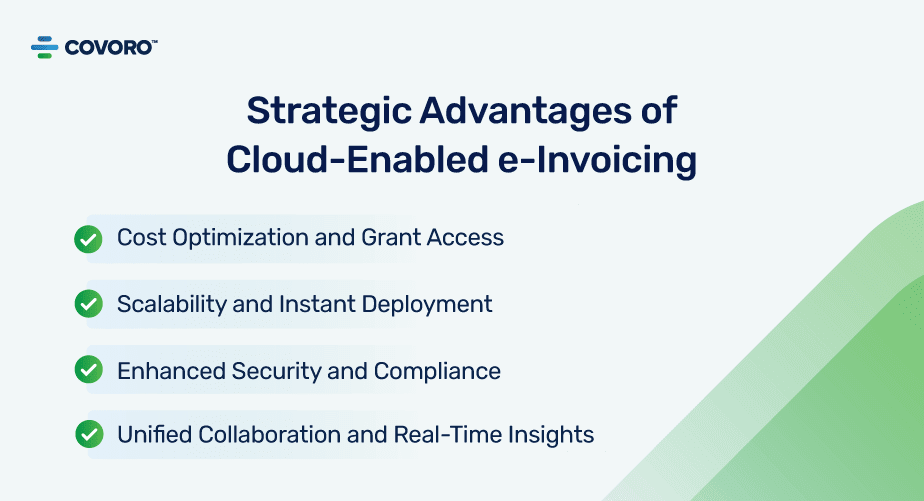
1. Cost Optimization and Grant Access
Adopting cloud-hosted e-invoicing eliminates large upfront infrastructure investments. Malaysia’s MDEC grants for PEPPOL-compliant platforms further defray costs, making the pay-as-you-go cloud model even more attractive for businesses seeking LHDN compliance.
2. Scalability and Instant Deployment
Cloud elasticity ensures e-invoice volumes and automation modules scale seamlessly during peak billing cycles or across franchise networks. New e-invoicing modules can be deployed in minutes, accelerating time-to-value for both public sector entities and private enterprises.
3. Enhanced Security and Compliance
National cloud platforms deliver enterprise-grade encryption, continuous monitoring, and automated backup aligned with Malaysia’s data sovereignty requirements. Combined with PEPPOL standards, cloud-based e-invoicing meets stringent tax-authority and cross-border compliance mandates.
4. Unified Collaboration and Real-Time Insights
Cloud-based dashboards provide finance and compliance teams with centralized visibility into invoice issuance, payment status, credit health, and tax filing across multiple entities. Real-time alerts for anomalies or late payments empower proactive decision-making.
Partnership Models and Revenue Opportunities
Strategic Alliances
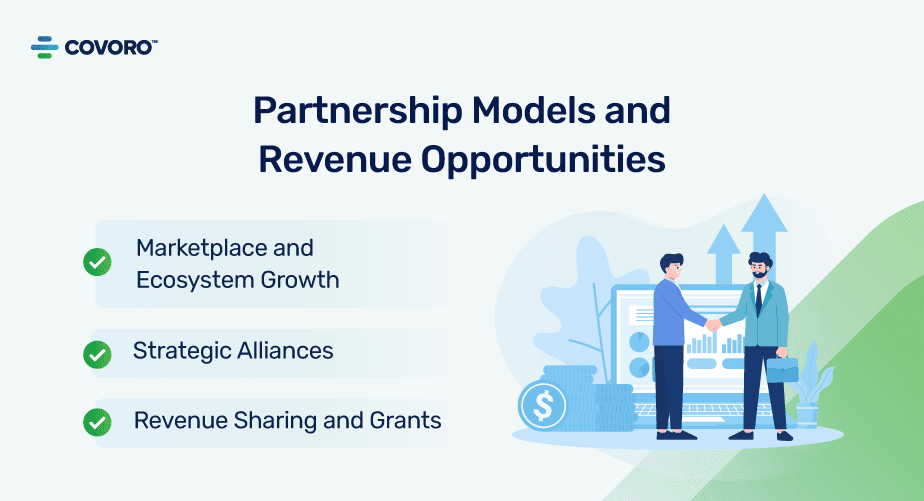
Collaborations between cloud providers and e-invoice specialists (e.g., COVORO) create integrated ecosystems. Joint go-to-market teams can offer bundled cloud credits, automation modules, and professional services to public sector agencies, utilities, and large enterprise groups.
Revenue Sharing and Grants
Partners can structure revenue-sharing agreements on e-invoice usage fees and automation subscription modules. Access to government grants for PEPPOL adoption boosts customer uptake while delivering recurring revenue for both cloud and solution partners.
Marketplace and Ecosystem Growth
Cloud marketplaces expand reach to SMEs and multisite franchises. By listing COVORO’s e-invoice solutions on the cloud Marketplace, partners tap into a broader customer base, simplify procurement, and enable one-click provisioning.
Driving Digital Finance Transformation
Cloud-hosted, AI-driven e-invoicing catalyzes new business models:
-
SME Financing: Automated financing offers based on real-time invoice data.
-
Vendor Onboarding: Touchless onboarding via digital identity and tax-compliance checks.
-
Compliance Tracking: Single pane for franchise and vendor compliance across multiple jurisdictions.
-
Operational KPIs: Dashboards monitoring invoice turnaround, payment cycles, and tax filing performance.
Industry use cases in Malaysia include:
-
Public Sector: Automating fee collection and inter-agency billing on the Cloud.
-
Smart Cities: Municipal tax, utilities billing, and subsidies managed via e-invoicing.
-
BFSI & Insurance: Embedding e-invoice data into risk assessments and policy underwriting.
-
Healthcare & Education: Streamlined procurement, vendor compliance, and regulatory reporting.
Implementation Best Practices
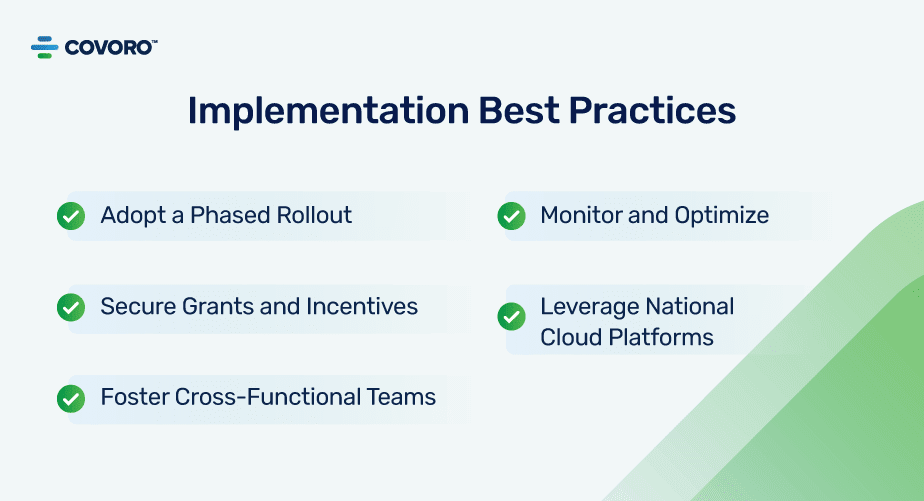
- Leverage National Cloud Platforms: Host the entire e-invoicing stack on the cloud to ensure data sovereignty and performance.
- Secure Grants and Incentives: Apply for MDEC PEPPOL grants to offset onboarding costs and accelerate adoption.
- Adopt a Phased Rollout: Begin with core AP automation and vendor onboarding, then expand to advanced analytics and financing services.
- Foster Cross-Functional Teams: Align IT, finance, and compliance stakeholders to streamline integration and change management.
- Monitor and Optimize: Continuously track usage metrics, user feedback, and compliance KPIs to refine workflows and broaden service adoption.
Emerging Trends and Future Outlook
-
Edge-Enabled Finance: Integrate edge computing for ultra-low-latency invoice validation in critical infrastructure.
-
Serverless Automation: Adopt function-as-a-service for event-driven invoice processing and reconciliation.
-
Sustainability and Green Finance: Utilize cloud efficiencies and carbon-neutral data centers to support ESG-driven procurement and invoicing.
Overcoming Adoption Challenges
Despite the clear benefits, implementing cloud-based e-invoicing and finance automation can present obstacles. Legacy systems may lack APIs for seamless integration, and stakeholders in finance and IT may resist process changes. Data migration from on-premises ERP systems requires careful planning to prevent disruption. To mitigate these risks, organizations should establish a dedicated cloud migration team, conduct pilot deployments, and invest in change management initiatives, including user training and clear communication of ROI metrics.
Case Study: Malaysian Utility Provider Transformation
A leading Malaysian water utility recently migrated its entire billing and collections process onto a PEPPOL-compliant e-invoicing platform hosted on the Cloud. After an initial three-month pilot, the utility achieved:
-
80% reduction in invoice processing time.
-
25% decrease in late-payment penalties.
-
Real-time visibility into vendor performance and compliance across 15 regional offices.
Building on this success, the utility expanded the solution to automate subsidy disbursements and integrate AI-driven fraud detection for government grants, further driving operational efficiency and transparency.
Scaling Across Franchises and Multi-Entity Enterprises
Franchises and conglomerates with multiple subsidiaries benefit significantly from a centralized cloud e-invoicing platform. By standardizing on a single PEPPOL-compliant solution:
-
Policy Consistency: Uniform AP workflows and compliance checks.
-
Simplified Audits: Centralized data repository for all invoice records.
-
Economies of Scale: Volume-based discounts on cloud usage and grants.
-
Rapid Onboarding: Template-driven configuration accelerates new site integrations.
This model enables head offices to monitor financial health across the entire network, identify process bottlenecks, and roll out enhancements globally in a phased manner.
Advanced Analytics and Predictive Insights
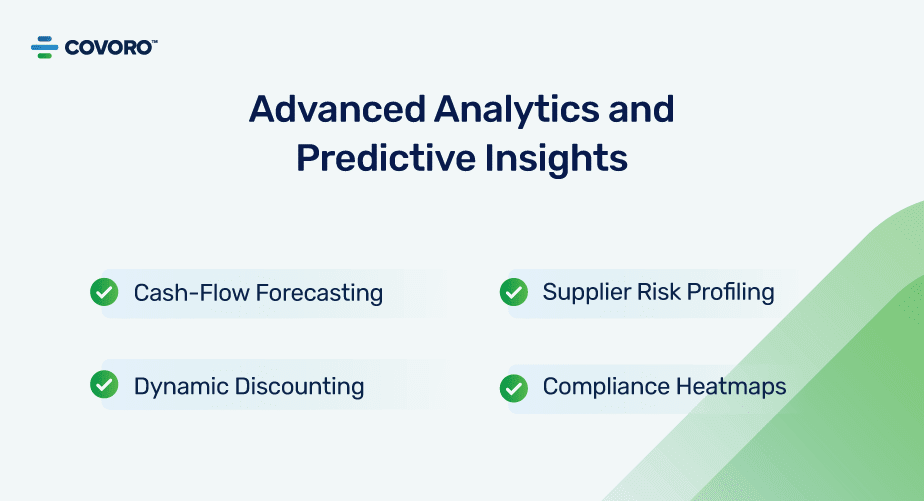
Beyond basic automation, AI-powered analytics engines can mine invoice and payment data to surface predictive insights:
-
Cash-Flow Forecasting: Predict short-term liquidity needs based on invoice aging trends.
-
Supplier Risk Profiling: Assess vendor stability by analyzing payment patterns and credit scores.
-
Dynamic Discounting: Identify opportunities for early-payment discounts to optimize working capital
-
Compliance Heatmaps: Visualize geographic or business-unit areas with elevated tax-filing risks
These advanced capabilities turn transactional data into strategic intelligence, driving better financial planning and risk management.
Ecosystem Expansion: Integrating Third-Party Services
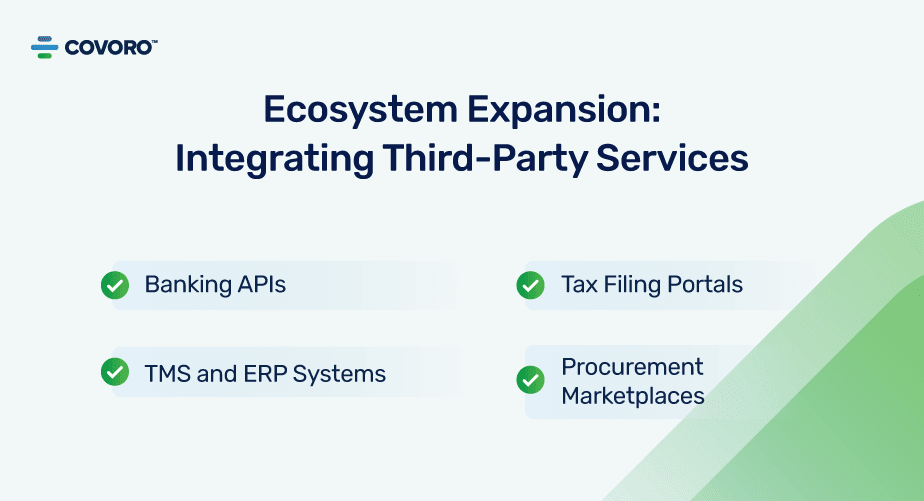
A robust cloud platform supports seamless integration with complementary services:
-
Banking APIs: Automate payment initiation and reconciliation directly from corporate bank accounts
-
TMS and ERP Systems: Sync invoice metadata and GL codes to maintain a unified financial ledger
-
Tax Filing Portals: Streamline SST and income-tax submissions by exporting compliant e-invoice records
-
Procurement Marketplaces: Link purchase orders to invoices for end-to-end P2P automation
By fostering an open ecosystem, organizations can tailor solutions to their unique requirements and plug in best-of-breed applications as needed.
Future Precisions: Blockchain and Smart Contracts
Looking ahead, blockchain-enabled e-invoicing promises immutable audit trails and automated smart contracts. Each invoice issued could be recorded on a permissioned ledger, triggering self-executing payment agreements once predefined conditions, such as delivery confirmation or regulatory approval, are met. This innovation holds the potential to eradicate disputes and further compress payment cycles.
Conclusion
Cloud infrastructure fused with AI-driven, PEPPOL-compliant e-invoicing platforms like COVORO on Malaysia’s Cloud empowers organizations to achieve next-level finance automation. By addressing integration challenges, scaling across franchises, and leveraging advanced analytics, businesses can unlock transformative efficiencies. As emerging technologies, such as blockchain-based smart contracts, mature, the cloud-e-invoicing nexus will continue to redefine finance operations, cementing Malaysia’s leadership in digital compliance and innovative financial ecosystems.
Categories
You Might Also Like