E-Invoicing Solutions for Malaysia’s Tourism Industry
Table of Content
- What is E-Invoicing, and How Does It Work in Malaysia's Tourism Industry?
- What Are the Benefits of E-Invoicing for Tourism Businesses?
- What Are the Challenges in Adopting E-Invoicing in the Tourism Sector?
- Covoro.ai : A Solution to Simplify GST Compliance for Tourism Businesses in Malaysia
- Conclusion & FAQ's
The tourism industry in Malaysia has witnessed exponential growth over the past few years, becoming one of the country's leading economic sectors. However, like any other industry, it faces challenges, including managing large transactions and ensuring compliance with E-Invoicing Malaysia regulations through e-invoicing.
The introduction of electronic invoice Malaysia (e-invoicing) is seen as a transformative solution to streamline operations, enhance transparency, and improve efficiency. By adopting e-invoicing solutions, businesses can better manage e-invoices, improve accuracy, and reduce manual processing.
E-Invoice Malaysia is a crucial step in modernizing the sector, making it more efficient and compliant with tax regulations.
What is E-Invoicing, and How Does It Work in Malaysia's Tourism Industry?
E-Invoice is the process of generating and transmitting invoices electronically, replacing traditional paper invoices. It allows businesses to digitally issue, receive, and store e-invoices, improving accuracy and reducing administrative burdens.
In Malaysia, the government has pushed for digitization across sectors, including tourism. Implementing E-Invoice Malaysia in the tourism sector is part of efforts to boost the digital economy and enhance tax collection with e-invoices. These efforts are guided by official e-invoice guidelines issued by the Inland Revenue Board (IRB).
This shift to e-invoice technology will streamline business operations and improve compliance with e-invoice requirements, helping tourism businesses manage invoicing more efficiently.
How Does E-Invoicing Shape Malaysia's Tourism Industry?
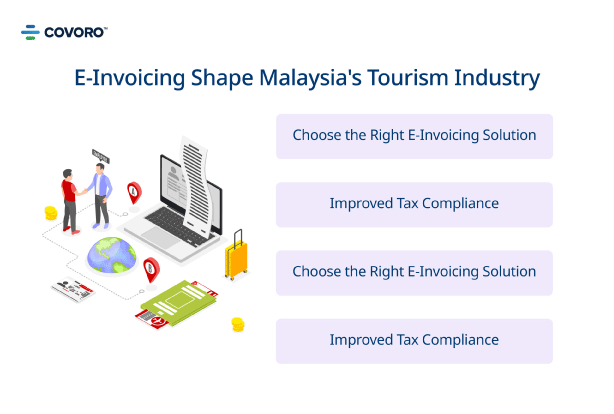
Malaysia's tourism sector, which includes travel agencies, accommodation providers, and tour operators, handles numerous transactions that must be processed accurately. E-Invoicing Malaysia offers several advantages to streamline operations:
- Streamlining Financial Processes
By adopting E-Invoicing Malaysia, businesses can automate invoicing, reducing manual errors and speeding up processing, which allows companies to focus on customer service rather than administrative tasks. - Improved Tax Compliance
E-Invoicing Malaysia makes it easier for businesses to comply with tax regulations by enabling the Inland Revenue Board (IRB) to track transactions in real-time, minimizing fraud and simplifying tax reporting. - Increased Transparency and Reduced Fraud
With E-Invoicing Malaysia, each transaction has a digital trail, making it harder for fraudulent activities to go undetected—critical for the high-volume, cross-border transactions in tourism. - Efficient Data Management and Reporting
E-Invoicing Malaysia allows businesses to securely store financial data digitally, reducing paperwork and simplifying financial reporting, which leads to more accurate audits and better data management.
What Are the Benefits of E-Invoicing for Tourism Businesses?
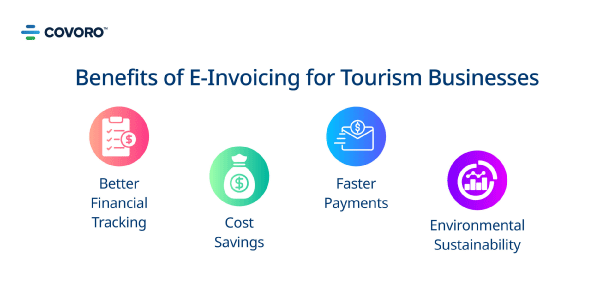
E-invoicing in Malaysia provides several advantages for businesses in the tourism sector, helping them streamline operations, reduce costs, and improve financial tracking. Here are some key benefits of adopting E-Invoicing Malaysia:
-
Better Financial Tracking
E-Invoicing Malaysia seamlessly integrates with accounting systems, providing businesses real-time insights into their financial situation. It allows tourism businesses to manage cash flow, track outstanding payments, and forecast revenue accurately.
-
Cost Savings
Traditional paper invoicing involves printing, mailing, and storing physical invoices, which can be expensive. E-Invoicing Malaysia eliminates these costs and reduces the need for manual labor, offering a more affordable solution for businesses in the tourism sector.
-
Faster Payments
With E-Invoicing Malaysia, the payment cycle is significantly accelerated, ensuring that invoices are delivered and processed without delays. Which helps tourism businesses get paid faster, improving cash flow and financial efficiency.
-
Environmental Sustainability
By reducing the reliance on paper, E-Invoicing Malaysia supports environmental sustainability. This shift towards eco-friendly practices resonates with the growing number of consumers and stakeholders prioritizing sustainability.
E-Invoicing Solutions empower tourism businesses to enhance their financial operations and ensure compliance with Malaysian tax regulations.
What Is Malaysia's E-Invoicing Implementation Timeline and Latest Updates?
The Malaysian government is gradually implementing e-invoicing across industries to drive digital transformation. The e-invoice implementation date for various sectors is being rolled out in phases. Initially introduced under GST, e-invoicing became streamlined after the introduction of SST. By 2025, adoption will expand to more sectors, improving tax efficiency and reducing administrative burdens.
- Government Support and Regulations To encourage adoption, the government offers e-invoice guidelines, tax reliefs, financial support, training resources, and online platforms for managing e-invoices.
- Implementation Phases E-invoicing is being rolled out in phases, with larger businesses and specific sectors adopting it first. The tourism industry is among the sectors expected to complete implementation soon. Some businesses have called for an e invoice implementation date extension, but the government remains committed to its phased approach..
- Compliance Monitoring The Inland Revenue Board (IRB) ensures compliance with e-invoicing requirement & deadlines to avoid penalties and ensure smooth tax reporting.
- Integration with Other Digital Platforms E-invoicing is part of a more significant effort to integrate digital platforms like payment systems and accounting software, improving business efficiency in the tourism sector.
What Are the Challenges in Adopting E-Invoicing in the Tourism Sector?
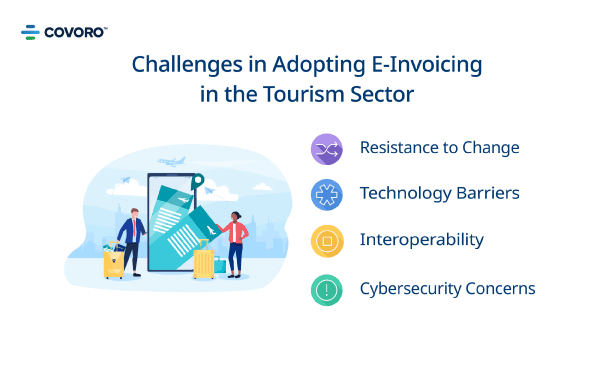
While the benefits of e-invoicing are clear, the tourism sector faces several challenges in adopting this technology.
-
Resistance to Change
Many small and medium-sized businesses (SMEs) in the tourism industry hesitate to move away from traditional methods, fearing that the transition to e-invoicing will be costly and complicated.
-
Technology Barriers
Businesses, especially in rural areas, may lack the necessary technological infrastructure or skills to implement e-invoicing systems. Government and tech provider support is crucial in overcoming this obstacle.
-
Interoperability
For e-invoicing to be effective, it must integrate smoothly with other systems like payment gateways, accounting software, and tax platforms. Ensuring this interoperability is a significant technical challenge.
-
Cybersecurity Concerns
As businesses shift to e-invoicing, the risk of cybersecurity threats grows. Tourism businesses must collaborate with IT experts to secure e-invoicing systems to protect sensitive financial data and prevent fraud.
Despite these hurdles, E-Invoicing Solutions offer scalable and secure platforms tailored to overcome these barriers and streamline processes.
How Tourism Businesses Can Effectively Transition to E-Invoicing and Ensure Smooth Implementation
To successfully transition to e-invoicing, tourism businesses must take several necessary steps:
- Stay Informed on Government Regulations Tourism businesses should stay updated on the Malaysian government's latest e-invoice guidelines and deadlines for e-invoice implementation, which ensures compliance and helps avoid penalties.
- Invest in Technology Businesses must adopt e-invoice software that meets the country's e-invoice requirements. Investing in reliable, secure software will improve efficiency and streamline invoicing.
- Train Employees Proper training is essential to ensure employees are familiar with the e-invoice solutions, which can be achieved through online resources, workshops, or hiring experts in e-invoicing systems.
- Collaborate with Service Providers Tourism businesses should work closely with their suppliers and partners to ensure e-invoices are accepted and processed smoothly across the supply chain.
How Will E-Invoicing Transform the Malaysian Tourism Industry?
As Malaysia advances toward a fully digital economy, electronic invoicing (e-invoicing) is set to transform the tourism industry. Integrating technologies like AI and blockchain will enhance the security and efficiency of e-invoice LHDN systems, ensuring compliance and operational improvements.
The benefits of e-invoicing are undeniable: faster payments, cost savings, and improved tax compliance. Tools such as the MyInvois portal streamline invoicing processes, helping businesses adhere to the LHDN e-invoice framework.
As the e-invoice implementation date of e-invoicing approaches, companies must prepare by addressing resistance to change and technological gaps through strategic planning and employee training.
Covoro.ai : A Solution to Simplify GST Compliance for Tourism Businesses in Malaysia
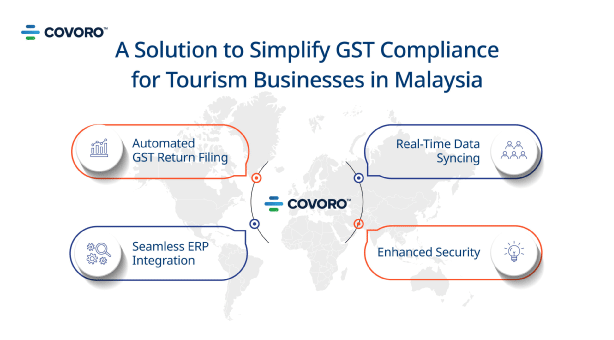
Covor.ai is a cloud-based platform designed to help businesses manage and streamline their GST compliance processes. For tourism businesses in Malaysia, it offers a comprehensive solution that integrates e-invoicing, GST return filing, and data management.
By automating complex GST processes, including e-invoice generation and submission, Covoro.ai ensures timely and accurate tax submissions, helping businesses stay compliant without the hassle.
Features of Covoro.ai for Tourism Businesses:
- Automated GST Return Filing: Automates the preparation and filing of GST returns such as GSTR-1 and GSTR-3B, reducing manual effort and errors.
- Seamless ERP Integration: Easily integrates with popular ERP systems like Tally and SAP, ensuring smooth synchronization and operational efficiency.
- Real-Time Data Syncing: Provides real-time updates and notifications, keeping businesses informed and compliant with minimal effort.
- Enhanced Security: Ensures robust data security measures, protecting sensitive financial data, including e-invoices, and preventing fraud.
Conclusion
Adopting LHDN e-invoice systems is essential for Malaysia's tourism sector to thrive in a digital economy. By leveraging E-Invoicing Solutions, businesses can simplify compliance, reduce costs, and improve transparency in their operations. Platforms like MyInvois enable automation, reduce errors, and accelerate payment cycles. Though challenges remain, they can be mitigated with government support and proper planning.
As we near the e-invoice implementation date, embracing e-invoicing will enhance efficiency, transparency, and sustainability, ensuring Malaysia's tourism industry stays competitive in a digital world.
FAQ On E-Invoice Implementation in Malaysia's Tourism Industry
Who is responsible for issuing e-invoices for flight tickets sold through travel agents or third parties?
If the agent acts as the principal, they issue the e-invoice. If the agent is acting on behalf of the airline, the airline will issue it instead. This responsibility depends on the contractual relationship between the parties involved.
Whose details should be used as the Buyer in e-Invoices for flight ticket sales?
For individual ticket purchases, the e-invoice should reflect the details of the person making the purchase. In the case of group bookings, the seller can use either the purchaser's details or the details of individual passengers, depending on their internal process or preference.
How should e-invoices be handled for refundable and non-refundable deposits for tour packages?
Refundable deposits don't require an e-invoice when collected, as no tax is due at that point. Non-refundable deposits must be invoiced at collection. A separate e-invoice must be issued for the remaining balance of the tour.
What is the e-invoice requirement for third-party tour guide services?
Local tour guides are required to issue e-invoices to the travel agency directly. The travel agency must issue a self-billed e-invoice if the tour guide is foreign, ensuring proper documentation and tax reporting.
Can a travel agency issue a consolidated e-invoice for bundled services in tour packages?
If the tour package includes flight tickets, individual e-invoices for each service are necessary. A consolidated e-invoice is allowed for packages without flight tickets. This e-invoice must be issued within seven days after month-end.
Is it permissible to issue consolidated e-invoices for flight tickets?
Consolidated e-Invoices for flight tickets or private air charters are not allowed. Each flight ticket must have its e-invoice to ensure proper tax reporting. This rule applies strictly to air travel services.
What should a travel agency do if the Buyer does not request an e-invoice?
The travel agency must still issue an e-invoice for flight tickets, regardless of the Buyer's request. A receipt may be issued for non-flight products unless the Buyer requests an e-invoice.
How are e-invoices managed for flight tickets and non-flight products sold in a single transaction?
Travel agencies must issue either a single e-invoice for all items in the transaction or separate e-invoices for flight tickets and non-flight products. So, it will ensure that all products are correctly recorded for tax purposes.
What is the treatment for e-Invoices when local and foreign services are combined?
Separate e-invoices should be issued for local and foreign services, depending on their nature. Local services require standard e-invoicing, while foreign services may require self-billed e-invoices.
What happens if the Buyer's details are inconsistent in a group booking?
In case of inconsistencies, the seller can issue e-invoices using either the purchaser's or the individual passengers' details. It will allow flexibility in handling group bookings.
Who is exempted from issuing an e-invoice?
Certain businesses or transactions may be exempted from issuing an e-invoice, such as small businesses below the mandatory turnover threshold or specific types of exempt supplies as defined by LHDN’s e-invoice guidelines.
Which company is eligible for e invoice?
All companies operating in Malaysia that meet the turnover thresholds specified by the Inland Revenue Board (IRB) are eligible and, in most cases, required to issue e-invoices. Eligibility depends on factors like annual revenue and business type.
What are the mandatory fields of an e invoice?
The mandatory fields of an e-invoice include invoice number, invoice date, supplier and buyer details (name, tax registration number), itemized list of goods/services, quantity, price, tax amounts, and the total payable. These fields are outlined in the e-invoice specific guidelines issued by LHDN.
What is the 7 day limit for e invoice?
In Malaysia, e-invoices must be issued within 7 calendar days from the date of the underlying transaction (supply of goods or services). This rule ensures timely reporting and compliance with LHDN e-invoice regulations.
Categories
You Might Also Like